FAQs
What is HSTA?
Health Sciences & Technology Academy, known as HSTA, is a one-of-a-kind mentoring program in the state of West Virginia that helps participating high school students enter and succeed in STEM+M-based undergraduate and graduate degree programs. HSTA marshals the efforts of hundreds of mentors—teachers, community members, higher-education faculty and staff, and the HSTA participants themselves—through a framework that supports students facing social and financial challenges to obtaining a diploma and moving on to college.
3555 high school students have graduated from HSTA, 1998-2024
99% of HSTA graduates attend college
87% graduate from college; 86% of these students graduate with a 4-year degree or better
84% stay in West Virginia to work
On average, HSTA students earn $30,000 per year more than their parents
State Schools provide substantial tuition support through medical school and other advanced STEM+M-based degrees
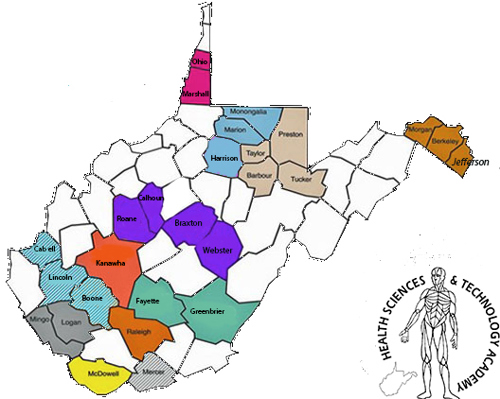
Where is HSTA?
What is Summer Camp?
Every year HSTA hosts four Summer Institutes: a freshmen, sophomore, junior, and senior camp. Camps are held on various college campuses. Students attend core classes and labs based on each camp's STEM+M/health focus. Academic rigor builds year by year to build skills for success. Students also learn the “soft” skills needed for college, like time management, communication, and social interaction while most importantly having fun together.
What is the Community Based Program?
Students matriculating from the summer programs progress into community-based after school club programs which consist of academic enrichment projects to further develop their cognitive skills by emphasizing observation, hypothesis formation, experimentation, analysis, and communication. The projects are community based and driven by student interest. More information about individual HSTA club projects can be found at the HSTA Club Home Pages.
Teacher leaders of the community-based programs weave leadership skills training, goal identification, and self-esteem promotion into each club experience. These projects supplement students’ in-school learning. The goal is to bring knowledge and skills up to or beyond chronological grade level. The program is developed and carried out in partnership with other WVU units, higher education, West Virginia public schools, community leaders, parents, health care providers and students.